
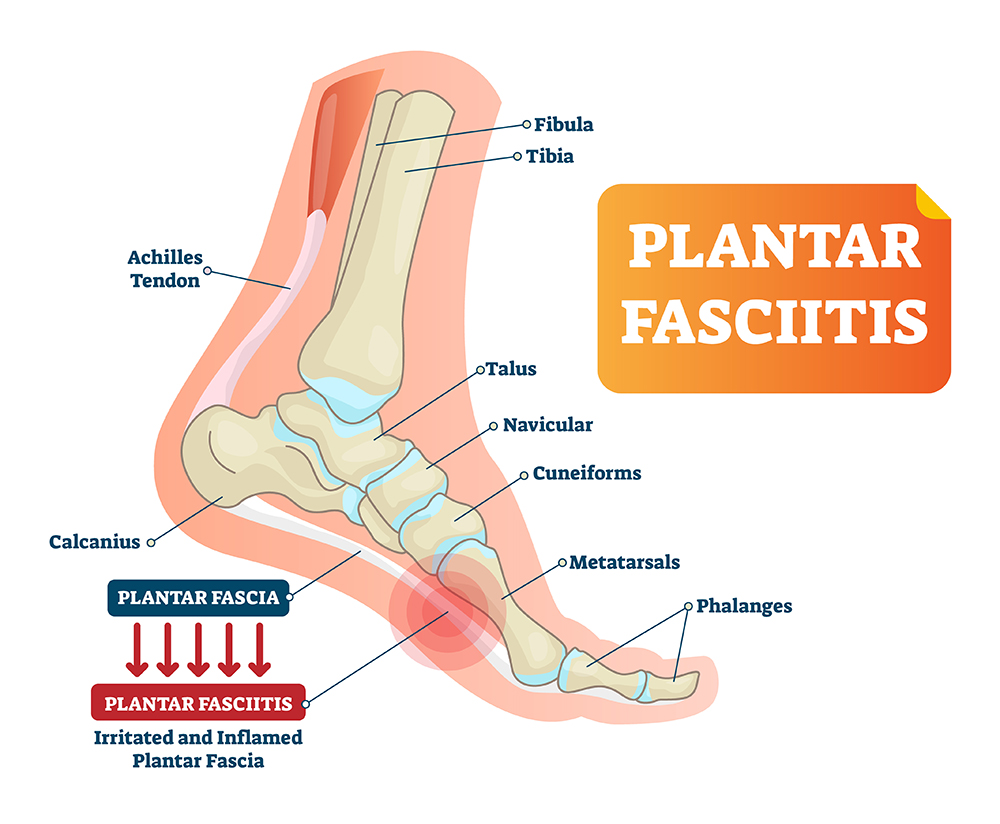
What Is Plantar Fasciitis?
A foot pain condition caused by the overuse of fibrous tissue that connects toe to heel is called plantar fasciitis. A common foot and ankle problem for power-walkers and power-workers alike, plantar fasciitis is often caused by being on your feet for too long. While taking it easy for a few days may be a temporary fix, long-term relief may require help from regenerative medicine.
Stem Cell Therapy NYC offers regenerative therapies for many orthopedic issues like plantar fasciitis. Dr. Leon Reyfman and his team of experienced pain management doctors have extensive clinical training in stem cell therapy and platelet-rich plasma (PRP) to get you out of pain and back on your feet.
What Are the Signs of Plantar Fasciitis?
Acute pain that reaches up from your heel to lower leg when you get out of bed in the morning may indicate a plantar fascia flare up. Much like bursitis in the knee or hips, plantar fasciitis affects the foot’s main shock absorber, resulting in pain that’s sharpest after long periods of rest.
If you suffer from intense pain or dull aches in your feet after extended activity or as a result of foot and ankle injury, you may be more vulnerable to developing plantar fasciitis. Symptoms of plantar fasciitis may subside with ice and rest but are quick to return as soon as you start moving again. A few common symptoms that may significantly improve after PRP for plantar fasciitis include:
- Pain. Sharp pain that radiates through the heel, through the arch and occasionally up the back of the leg through the calf, may be related to overstretching of the plantar tissue.
- Tenderness. Weakness or tenderness around the arch, toe knuckles and ankles may be caused by overuse and strain on plantar fascia.
- Numbness. Areas of the heel and toes may feel tingly or numb if the affected walk causes pinched nerves.
- Swelling. Inflammation around the foot and ankle and tenderness in the arch of the foot may be a sign of plantar fasciitis.
What Contributing Factors Lead to Plantar Fasciitis?
Aside from prolonged activity, unbalanced posture and genetic predisposition may cause abnormal strain on the plantar tissues. Limited flexibility in the Achilles tendon causes other muscle and tissue restrictions throughout the calf and foot, resulting in problems with plantar fasciitis, tendonitis, and ligament tears.
Plantar fasciitis often is the result of musculoskeletal issues. Osteoarthritis and degenerative disc disease may significantly alter your gait, putting new pressure on different areas of your feet. Hip arthritis also indirectly affects your instep, causing heel and arch pain. Other causes of plantar fasciitis include:
- Overuse. Repetitive activity like walking or running for long periods of time without rest cause issues in the soft tissues of feet.
- Inadequate footwear. Worn soles and improper arch support contribute to weakened tissues on the bottom of your feet and aggravate back, neck, and disc injuries.
- Genetics. High arches, flat feet or other structural abnormalities can contribute to tissues and tendons being too short to function properly.
- Medications. Certain meds that cause muscle weakness or limit your body’s ability to heal might contribute to issues with plantar fasciitis.
What Type of Regenerative Therapy Relieves Foot Pain?
Doctors turn to stem cell therapy for foot and ankle problems along with other regenerative nerve treatments as optimal non-surgical solutions for pain. A plantar fasciitis injection in NYC can spur natural healing responses without further disruption to inflamed pedal tissues. This kind of treatment provides delicate accuracy that surgery can’t compete with.
Along with PRP for foot and ankle issues, unconventional treatments like peripheral magnetic stimulation, low-level laser therapy, and customized shock wave therapy provide promising results for stimulating your body’s ability to heal itself. A few other regenerative treatments that are highly effective in treating plantar fasciitis include:
- PRP for plantar fasciitis. Administered via injection, PRP utilizes your own platelets to regrow damaged tissue surrounding the plantar tissue.
- Bone marrow stem cell injection (BMAC). Used in chronic cases of plantar fasciitis, stem cells removed from your own bone marrow are injected directly into the heel for rapid cell repair.
- Platelet lysate injections. A concentrated version of PRP for plantar fasciitis, platelet lysate offers quick release of growth factors to reduce inflammation in the foot.
- Ozone therapy. Ozone gases injected into the inflamed tissue engage natural healing responses.
- Nerve entrapment release. Plantar fasciitis is often related to issues with the Baxter’s nerve, located inside the heel. Both conditions may be treated with stem cells and PRP for nerve pain.
- Stem cell therapy and PRP for joints repair and remove joint pain in your feet after the nerves have been repaired.
- PRP and stem cell therapy for your back are helpful when nerve pain travels through your spinal column.
Why Choose a Plantar Fasciitis Injection in NYC?
Regenerative solutions work as an effective middle ground when trying to avoid surgery. PRP for plantar fasciitis is an outpatient procedure with regenerative capabilities to prevent constant recurrences. The minimal risk and side effects of stem cell procedures are far less severe and time consuming than those of major surgery.
Day-to-day activities shouldn’t involve constant wincing and reaching for the medicine cabinet. The fast-acting healing capabilities in a plantar fasciitis injection in NYC improve quality of life and will have you back on your feet in no time. Contact Stem Cell Therapy NYC at any of its five locations to see if PRP for plantar fasciitis may work for you.
Page Updated on May 1, 2026 by Stem Cell Therapy